
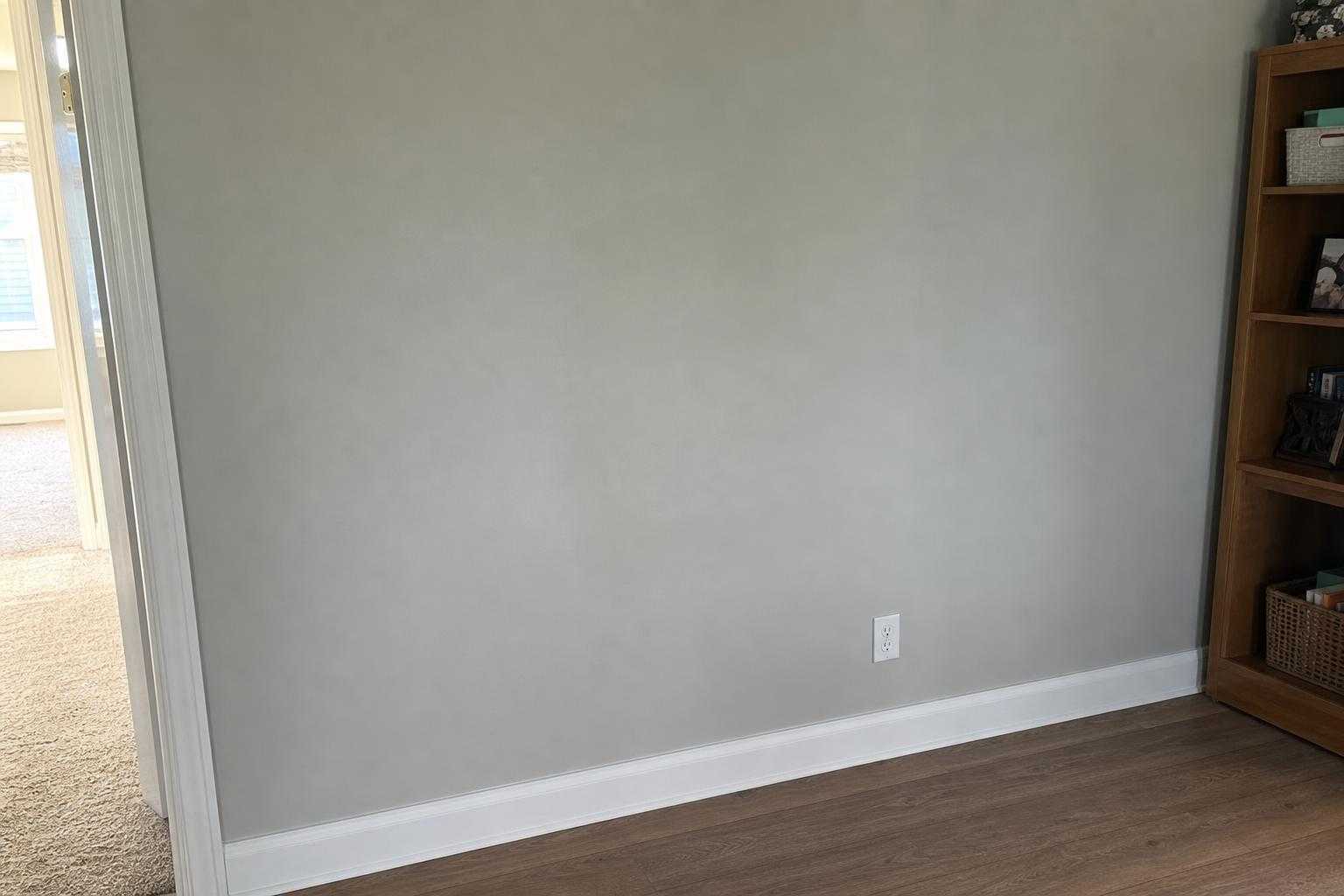
This page covers what drywall repair costs in Hastings, what the work actually includes, and what to expect when I show up at your door.
I’m Nick, owner of Bedrock Home and Property. On this page I walk through typical drywall repair jobs I handle for homeowners in Hastings and Dakota County, from small holes and dings to larger damaged sections. You’ll find a plain look at pricing, what’s included in the visit, and how the process goes from start to finish.
Feel free to read through at your own pace, or reach out directly through my contact page if you’d rather just ask a quick question or send a text.
Signs You Might Need Drywall Repair
Most homeowners notice a few telltale signs before picking up the phone, and your walls are usually pretty good at telling you when something needs attention. Catching it early keeps a small patch job from turning into a bigger project down the road.
Signs Worth Paying Attention To
- Visible holes or punctures in the wall surface. Whether from a doorknob, furniture, or an old anchor, open holes expose the wall cavity and need to be patched before painting or finishing.
- Tape seams lifting or bubbling along wall joints. When drywall tape separates from the mud beneath it, you will start to see raised ridges or peeling lines running across your walls.
- Cracks running along corners or ceiling edges. These often show up near windows and doors where the framing shifts slightly with seasonal temperature changes common in Hastings.
- Water stains with soft or crumbling drywall around them. If the surface feels spongy or flakes when you press it, the drywall has taken on moisture and the damaged section needs to be replaced.
- Popped nail heads showing through the paint. Small circular bumps or dimples on your wall surface mean fasteners have worked loose and the surrounding area needs to be re-mudded and smoothed.
What Drywall Repair Costs in Hastings
Most drywall repair jobs start around $175 for something straightforward like a small hole or a single ding. Once the damage gets more involved or you have multiple areas to address, work typically runs somewhere between $175 and $1,200 depending on what I find once I get there.
What the Job Usually Runs
- A single hole or localized damage. This is usually a doorknob punch-through, a small impact hole, or one spot where water caused the drywall to crumble. It patches up clean and fast, and most of these come in around $175 to $275.
- Multiple repairs in the same visit. When I am already on-site, it makes sense to knock out several problem spots at once. Patching three to five areas, feathering the mud, and priming typically runs $300 to $550.
- Larger section replacement. This comes up with water damage, mold remediation, or an area that was cut open for plumbing or electrical work. Cutting out and replacing a full panel or two, taping, mudding, and finishing usually lands in the $550 to $900 range.
- Extensive or whole-room drywall work. Ceiling repairs, heavy texture matching across a large surface, or damage from a significant leak can push a job toward the higher end of the range, often $900 to $1,200.
What Can Push the Cost Up or Down
- Texture matching. Orange peel, knockdown, and skip trowel finishes take extra time and material to blend convincingly with the existing wall.
- Ceiling access. Working overhead is slower and harder on my body, so ceiling repairs typically run a bit higher than comparable wall work.
- Number of coats needed. Deeper repairs require more rounds of joint compound and drying time, which adds to the overall job length.
- Paint and priming. If the repaired area needs primer and a finish coat to match the room, that adds to the total depending on paint type and coverage needed.
What Affects the Cost of Drywall Repair
Two homes on the same street in Hastings can have very different drywall repair quotes because the damage, the wall construction, and the finish work required can vary dramatically from job to job. What looks like a simple patch from the outside often reveals more work once I get eyes on it in person.
Factors That Move the Cost
- Size and number of holes. A single small nail pop takes minutes to address, but multiple large holes or a section of damaged drywall means more material, more mud coats, and significantly more time on the job.
- Finish level required. Matching an existing texture like orange peel or knockdown takes extra skill and time, and getting it wrong means the repair stands out even after painting.
- Scope of underlying damage. If water damage or mold is behind the drywall, I have to address that before patching, which adds steps and materials before I even touch the visible repair.
- Home age and wall construction. Older Hastings homes sometimes have plaster over lathe instead of standard drywall, which changes how I approach the repair entirely and usually adds time.
- Access to the repair area. A patch near the ceiling, in a tight hallway, or above a stairwell requires extra setup and careful maneuvering, which adds time compared to a straightforward wall repair at standard height.
What the Base Price Does Not Always Include
The starting price for drywall repair covers the patch itself, but a real quote can include additional line items depending on what I find once work begins. Most of these are situational, so knowing what they are helps you read a quote without any surprises.
Common Add-Ons on a Drywall Repair Job
- Texture matching. If your walls have a knockdown, orange peel, or skip trowel finish, blending the repaired area to match the surrounding texture takes additional time and material and shows up as its own line item.
- Paint and priming after the repair. A finished patch still needs paint to disappear, and I include this separately since color matching and wall coverage go beyond the base repair scope.
- Mold or moisture remediation. When I open a wall and find water damage or mold behind the drywall, that has to be addressed before closing it back up.
- Multiple coats of joint compound. Larger holes or deep repairs require extra drying time and additional coats to achieve a flat, seamless surface.
- Disposal of damaged drywall material. Hauling away old drywall, especially on bigger patches, adds a small but real cost to the job total.
Should You Repair or Replace?
Most drywall problems I see in Hastings homes are completely repairable without tearing anything out, and a good patch can last just as long as new material. That said, there are situations where repeated repairs or hidden damage make replacement the smarter call for your time and money.
When Repair Makes Sense
- A doorknob punched a hole through the surface layer. A single impact hole with clean edges and solid surrounding drywall is a straightforward patch that blends invisibly with proper finishing.
- A screw pop or nail line has lifted the surface. Refastening the panel and skim coating the area costs a fraction of replacement and solves the problem completely.
- A small crack has appeared along a ceiling seam. Tape separation from normal settling is easily re-bedded and feathered without disturbing any structural material.
- A corner bead took a hit and dented. Replacing just the damaged bead section and blending the compound is faster and far cheaper than pulling the whole panel.
When Replacement Makes More Sense
- Water damage has softened a large section of the panel. Saturated drywall loses structural integrity and can harbor mold, making full panel replacement the only reliable fix.
- Multiple repairs in the same area have built up uneven layers. At that point skim coating alone will not hide the patchwork, and fresh drywall gives a cleaner result.
- Pest damage has compromised an entire wall section. Scattered tunneling and crumbling cores mean repair costs would approach or exceed the price of simply hanging new panels.
- The existing drywall is heavily textured and discontinued. Matching an obsolete texture across a large patched area is difficult, and replacement lets everything finish consistently.
What Is Not Included in a Standard Drywall Repair Job
Knowing what a standard drywall repair visit covers helps you plan better and avoid unexpected costs when the job is done.
Outside a Standard Drywall Repair Visit
- Painting or priming the repaired area. I patch and finish drywall to a paint-ready surface, but applying paint is a separate service that adds time, materials, and a return visit once the mud fully cures.
- Fixing the underlying cause of the damage. If a pipe leak, pest damage, or structural issue caused the hole, that problem needs its own trade before I can make a lasting repair.
- Popcorn or textured ceiling matching. Replicating existing texture is a distinct skill set and adds scope beyond a flat drywall patch, so it gets priced separately.
- Electrical or plumbing work behind the wall. Any wiring or pipe repairs inside the wall cavity fall outside my scope and need a licensed electrician or plumber first.
If you are unsure whether something is included in your job, just ask me at the quote stage and I can clarify or adjust the scope before any work begins.
What to Expect on a Drywall Repair Visit
Drywall repair is one of those jobs where the dust and the waiting are the two things homeowners notice most. Unlike a quick fix, patching and finishing wall damage requires dry time between coats, so the visit has a different rhythm than most handyman calls.
How It Typically Unfolds
When I arrive, I look at every damaged area together with you so we agree on exactly what gets repaired and what the finished result should look like. The work itself involves cutting, patching, and applying joint compound, which means some sanding dust in the air and a low-to-moderate noise level for stretches of time. Depending on how many holes or how large the damage is, the active work can run anywhere from one hour to most of a day. I will be straightforward with you about whether the repair can be finished same-day or whether a second visit for final coats and sanding is the smarter path to a clean result.
What I See Doing Drywall Repair in Hastings
A significant portion of the repair calls I get in Hastings come from homes built before 1960, and those houses were finished with plaster over wood lath, not drywall. When I am patching a hole or blending a repair in those walls, I cannot treat it like a standard drywall patch. The lath backing requires different anchoring, and feathering new compound into an existing plaster surface takes more coats and more time to get a finish that does not telegraph through paint.
I get calls like this regularly from the Northside and Southside neighborhoods, where the older housing stock makes this a common part of the job. If you need this kind of work done right, you can learn more about my handyman services in Hastings.
Questions I Get All the Time in Hastings
These are the questions I hear most about Drywall Repair from homeowners in Hastings and the surrounding area before they schedule.
Q. How long does a drywall repair job typically take from start to finish?
A. It really depends on the size and number of holes I am patching. A single small hole can be finished in an hour or two, but larger repairs or multiple damaged areas may take most of a day. Drying time between coats of joint compound also adds time, so some jobs require a follow-up visit to sand and paint-prime once everything has fully cured.
Q. What should I do to get ready before you arrive to patch my walls?
A. Clear the area around each damaged wall section so I can work without moving furniture mid-job. If there is anything hanging on or near the repair area, go ahead and take it down beforehand. It also helps to let me know in advance if you have leftover paint that matches, since that can make the finished patch blend in much more cleanly.
Q. What happens if you open up a wall and find something unexpected, like mold or water damage?
A. I stop work and walk you through exactly what I found before doing anything else. Patching over hidden water damage or mold without addressing the cause would just create the same problem again down the road. We figure out the right path forward together, and nothing additional gets done without your go-ahead first.
Drywall Repair Costs in Hastings: What You Need to Know
You now have a clear picture of what goes into patching and finishing damaged drywall, and why prices vary based on hole size, location, and how much blending the repair requires. Jobs in Hastings typically start at $175 and can reach $1,200 depending on scope. Nick handles every job personally, so you know exactly who is showing up and doing the work.
Ready to Get Started?
If you have holes, cracks, or water-damaged sections you want taken care of, feel free to reach out or send a text. I work throughout Hastings and the south metro and am happy to take a look.
More on this topic: Drywall Repair service details, Walls & Finishes services, or visit Bedrock Home and Property.