
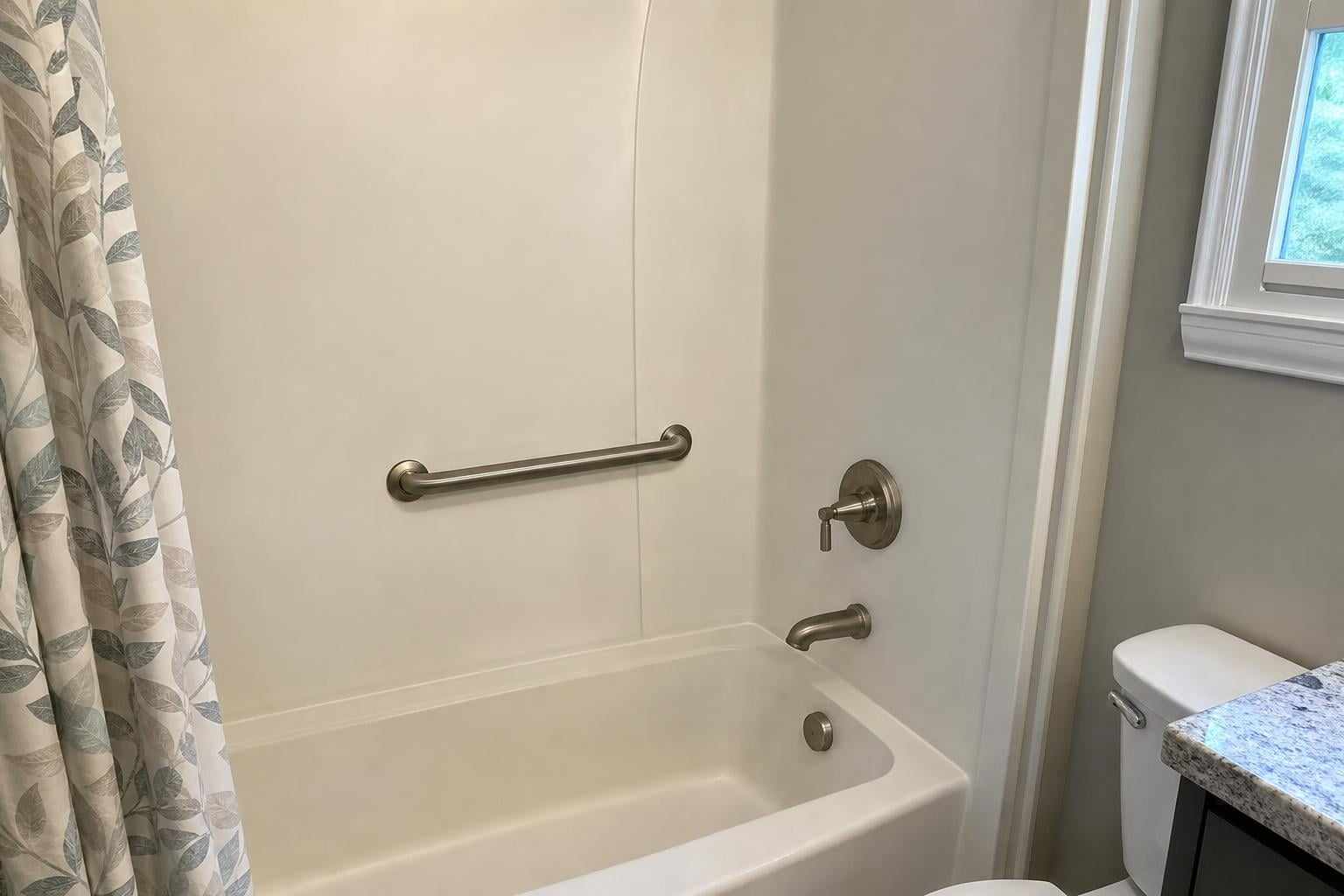
Here is everything Hastings homeowners need to know about grab bar installation before booking: what the job costs, what it includes, and what to expect during the visit.
I am Nick, owner of Bedrock Home and Property. On this page I walk through what grab bar installation typically runs here in Hastings, what the work actually involves, and what happens when I show up to get it done. Whether you need safety bars in a shower, near a toilet, or along a hallway, I want you to feel confident about what you are getting into before you book anything.
Feel free to read through at your own pace, or reach out directly through my contact page and I will get back to you promptly.
Common Types of Grab Bar Installation Jobs
Grab bar installation is not a single standard task because the right approach depends on where the bar is going, what surface it is mounting into, and who will be relying on it. Every home in Hastings I work in has its own layout, wall construction, and accessibility needs that shape how I handle the job.
The Most Common Variations
- Shower and tub surround bars. These are the most common requests I get, installed along tile or fiberglass shower walls where balance support is needed during bathing and the mounting surface requires locating studs or using specialty anchors.
- Toilet safety bars. These mount beside the toilet to help someone lower themselves down or stand back up, and they often require careful stud placement to handle significant side-loading weight.
- Fold-down grab bars. Hinged bars that swing flat against the wall when not in use, ideal for smaller bathrooms where a fixed bar would create an obstacle in tight spaces.
- Angled or diagonal bars. Installed at a 45-degree angle to assist with transitions from seated to standing, which makes them especially useful in walk-in showers.
- Blocking and reinforced wall prep bars. When walls lack adequate studs, I install backing boards inside the wall cavity first so the bar has a solid, secure anchor point.
What Grab Bar Installation Costs in Hastings
A single grab bar in a straightforward bathroom location typically starts around $150. Most jobs I see in Hastings run somewhere between $150 and $500 depending on how many bars are going in, where they need to be placed, and what the wall situation looks like behind the tile.
What the Job Usually Runs
- A single bar in a standard location. One grab bar near a toilet or on a flat drywall wall is about as simple as this job gets. No tricky angles, no blocking to add, and the install goes quickly. These come in around $150 to $200.
- When the job includes multiple bars or a tiled wall. Installing two or three bars, or working through ceramic tile without cracking it, takes more time and care. This scope typically runs $200 to $350.
- Full bathroom safety setup with blocking added. If the walls need backing installed to support the bars properly, or I am outfitting an entire shower and toilet area, the job gets more involved. Expect this range to land closer to $350 to $500.
What Can Push the Cost Up or Down
- Wall material. Tile, fiberglass surrounds, and older plaster walls all take more time to work through cleanly than standard drywall.
- Backing and blocking. If the wall lacks a stud in the right spot, I may need to open the wall and add blocking before the bar can be mounted safely.
- Bar grade and hardware. Heavier-duty commercial-grade bars or specialty finishes cost more than basic residential hardware.
- Number of locations. Each additional bar adds labor time, so installing across multiple bathrooms or several spots in one room affects the total.
What Affects the Cost of Grab Bar Installation
Two bathrooms in Hastings can look nearly identical and still come in at very different prices, because what’s behind the wall and how the bar needs to be mounted changes everything about how long the job actually takes.
Factors That Move the Cost
- Wall backing and stud placement. If the grab bar location lines up with studs or existing blocking, installation is straightforward, but if I need to open the wall and add backing first, that adds significant time and material cost.
- Tile or surface type. Drilling through ceramic or porcelain tile requires specialized bits and a much slower, more careful approach to avoid cracking, which adds labor compared to a standard drywall surface.
- Number of bars being installed. Installing one bar near a toilet is a different scope than outfitting an entire shower with multiple angled and horizontal bars, so quantity directly drives the total.
- Bar weight rating and material. Heavy-duty ADA-compliant bars rated for 250 to 500 pounds cost more than basic models, and the hardware required to mount them properly adds to both material and labor.
- Home age and construction type. Older Hastings homes sometimes have plaster walls or unusual framing layouts that make locating solid anchor points harder and slow down the installation considerably.
What Else Can Show Up on a Grab Bar Installation Quote
The starting price for grab bar installation covers the core work, but a few situational factors can add line items to the final total. Most jobs do not hit every one of these, but knowing what to look for helps you read a quote without surprises.
Common Add-Ons on a Grab Bar Installation Job
- Wall blocking or backer board installation. If your bathroom walls lack solid studs or existing blocking behind the tile, I need to open the wall and add backing before the bar can be mounted safely.
- Tile repair after mounting. Drilling into ceramic or porcelain tile occasionally causes cracking, and replacing a damaged tile adds material and labor to the job.
- Drywall patching. When blocking has to be added, the wall opening needs to be closed, mudded, and finished before I can complete the installation.
- Removal of an existing bar or fixture. If a towel bar or old grab bar occupies the target location, removing it and patching the old holes is a separate step.
- Upgraded hardware supplied by homeowner. Bars that require specialty anchors or longer fasteners for thicker walls may need additional hardware not included in a standard install.
Repair vs. Replace on Grab Bar Installation
When a grab bar starts to feel loose or the hardware looks worn, it does not always mean you need to start over from scratch. Some situations call for a simple fix, while others make more sense as a full replacement, and knowing the difference saves you money either way.
When Repair Makes Sense
- A bar has pulled slightly from the wall but the blocking or stud behind it is still solid. I can re-anchor it properly without touching the surrounding tile or drywall.
- The mounting screws have stripped out but the bar itself is in good shape. Replacing the hardware and re-securing to solid backing restores full strength at minimal cost.
- Surface rust has appeared on a chrome bar in a humid bathroom. Light corrosion that has not compromised the bar’s structure can be addressed without full removal.
- A single anchor point failed on a two-point bar while the other side holds firm. Repairing just the failed side is straightforward and keeps your existing bar in service.
When Replacement Makes More Sense
- The wall framing behind the bar has water damage or rot. Repair costs climb fast once structural work is needed, making a fresh install the smarter path.
- The bar is an older style that no longer meets your safety needs. Upgrading to a longer or higher-weight-rated bar is worth doing right instead of patching around limitations.
- Multiple anchor points have failed across the bar. When repair costs approach half the price of a new installation, replacement is the better investment.
- The bar is positioned incorrectly for the user’s height or reach. Relocating it entirely gives far better results than trying to work around a poor original placement.
What Is Not Included in a Standard Grab Bar Installation Job
Knowing what a standard grab bar installation covers helps you plan your budget and avoid surprises when the job wraps up. Some things that come up during this work belong to a different trade or a separate visit entirely.
Outside a Standard Grab Bar Installation Visit
- Tile repair or replacement. If existing tile is cracked or needs to be cut back to reach solid blocking, patching or retiling is a separate job that goes beyond the standard installation scope.
- Blocking installation inside finished walls. Adding wood blocking behind drywall before bar placement requires opening the wall, which is a full carpentry task priced separately from the bar install itself.
- Plumbing reroutes. If a pipe runs exactly where a bar needs to be anchored, moving that pipe is a licensed plumber’s job and not something I include in grab bar work.
- Accessibility assessments or occupational therapy recommendations. Determining the right bar placement for a specific medical condition is a clinical evaluation outside my handyman scope.
If you are unsure what your job involves, just ask me before we finalize the quote and I can adjust the scope to match what you actually need.
What to Look for When Hiring for Grab Bar Installation
Not every contractor approaches grab bar installation the same way, and the difference shows up the moment someone puts weight on the bar. Ask what is actually behind the installation method before you commit to anyone for this kind of safety work.
Things Worth Checking Up Front
- Wall stud or blocking location. A good installer confirms whether grab bars will anchor into studs or existing blocking, and explains the plan clearly before drilling anything.
- Weight rating of the bars being used. Ask whether the hardware meets ADA load requirements of at least 250 pounds, especially for primary bathroom safety use.
- Experience with tile or fiberglass walls. Drilling into ceramic tile without cracking it takes specific technique, so ask directly about experience with your wall type.
- Placement based on the actual user. Bar height and angle should be sized to the person using it, not just installed at a generic default position.
What I See Doing Grab Bar Installation in Hastings
A lot of the grab bar calls I get in Hastings involve older homes with plaster-over-lath walls, and that changes the job in a real way. Standard toggle anchors that work fine in drywall can fail or crack plaster during installation, so I locate studs before I ever drill and use anchoring methods sized for the wall construction. In a bathroom that has been updated a few times over a century, I also run into tiled surfaces over plaster, which means slower drilling, the right bit, and extra care to avoid cracking tile around the anchor points.
I do this work regularly in the Northside and Southside neighborhoods, where the older housing stock makes this kind of careful approach the standard rather than the exception. If you need grab bars or other safety work done right, reach out through my handyman services in Hastings page.
Questions I Get All the Time in Hastings
These are the questions I hear most about Grab Bar Installation from homeowners here in Hastings and around Dakota County.
Q. How long does it typically take to install a grab bar in a bathroom?
A. Most single grab bar installations take about an hour, but that can stretch depending on how many bars you need and what the wall is made of. Tile walls require more care to drill through cleanly without cracking, and locating studs in older Hastings homes sometimes takes a few extra minutes. If you are having multiple bars installed in the same visit, plan on two to three hours total.
Q. Is there anything I should do to get the bathroom ready before you arrive?
A. Clear out any items sitting on the vanity or shower ledge near where the bars will go, and remove any floor mats that could be a tripping hazard while I am working. If you already have a grab bar picked out, have it on hand so I can confirm the hardware fits the job before I start drilling. Having a clear path from the front door to the bathroom also makes it easier to bring in tools.
Q. What happens if you open up the wall and find a problem I did not know about?
A. I stop right away and walk you through exactly what I found before touching anything else. You decide how you want to handle it, and I give you an honest assessment of your options. Nothing moves forward without your approval, so there are never any surprise charges added to your bill.
Grab Bar Installation Costs in Hastings: What You Need to Know
You now have a solid picture of what grab bar installation involves, from selecting the right bar type to anchoring it securely into wall studs or using proper toggle hardware. Factors like the number of bars, wall material, and blocking requirements all influence where your project lands in the price range. When I come out, I handle the full job personally and leave the space clean and ready to use.
Ready to Get Started?
If you have questions or want to set up a time, feel free to reach out or send a text. I serve Hastings and the surrounding south metro area and am happy to take a look at what you need.
More on this topic: Grab Bar Installation service details, Lighting & Safety services, or visit Bedrock Home and Property.