
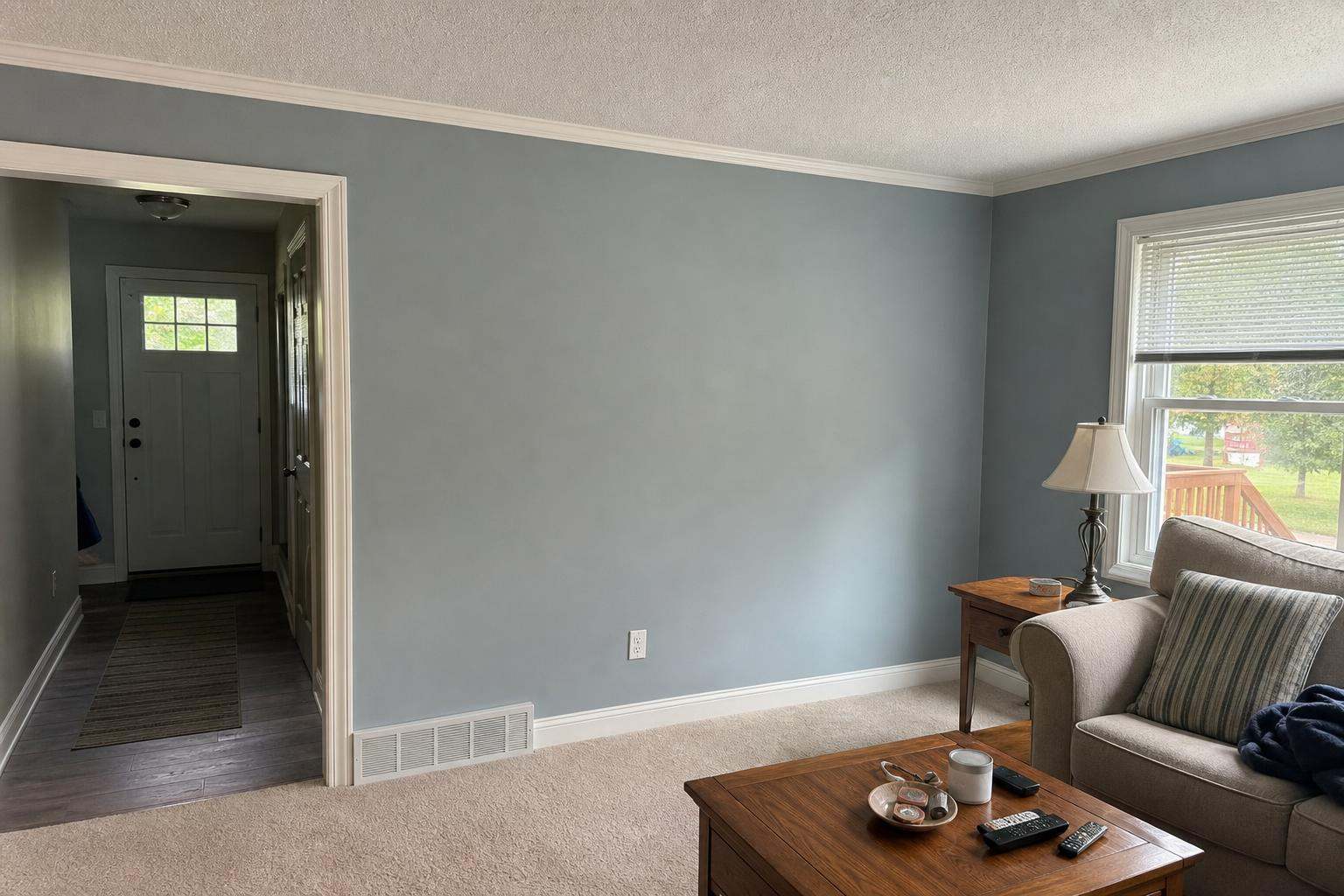
This page covers what interior painting costs in Hastings, what the work includes, and what to expect when I show up.
I’m Nick, owner of Bedrock Home and Property, and I do every job personally. Here you’ll find a straightforward look at how I price interior painting, what preparation and cleanup are included, and how a typical visit goes from start to finish.
Feel free to read through at your own pace, or if you already have a project in mind, reach out directly on the contact page and I’ll get back to you quickly.
Interior Painting: DIY or Hire Out?
Plenty of homeowners in Hastings handle interior painting on their own, and honestly, a lot of them do a fine job. That said, there are situations where the scope, condition, or detail work involved makes it worth calling someone in.
What You Can Reasonably Handle Yourself
- Single room refresh. If you are repainting a bedroom or small living space with similar colors, a capable homeowner can get solid results with proper prep and patience.
- Accent walls. A single feature wall with no complex trim or transitions is a manageable project for someone comfortable with a brush and roller.
- Touch-up work. Minor scuffs, small patches, and spot painting are well within reach for most homeowners who take their time.
- Low-ceiling rooms. Standard eight-foot ceilings with simple layouts do not require special equipment and are reasonable DIY territory.
When I Would Recommend Calling Someone
Where I think it makes sense to hire out is when you are dealing with high ceilings, stairwells, or detailed trim and millwork that requires clean edges and steady hands. Surfaces with significant damage, staining, or old texture work also tend to need more prep than most homeowners expect. Getting the prep wrong is usually what causes a paint job to fail early, and fixing that costs more than doing it right the first time.
What Homeowners in Hastings Actually Pay for Interior Painting
Most interior painting jobs start around $275 for something straightforward like a single room that’s already prepped and ready to go. Once you factor in multiple rooms, ceilings, or surfaces that need extra attention, projects typically land somewhere in the $275 to $2,500 range depending on what’s actually involved.
What the Job Usually Runs
- A single room refresh. This covers one room with standard wall height, no major repairs, and a coat or two of paint. Clean, quick work that most of these come in right around $275 to $450.
- When the job includes ceilings and trim. Adding ceilings, baseboards, or door and window trim increases both the time and the material needed. Jobs in this scope typically run $500 to $900 depending on the room count.
- Multi-room or whole-floor painting. Painting several connected rooms in one visit, often with color changes between spaces, takes solid prep and coordination. This range usually lands between $900 and $1,800.
- Full interior repaint with prep work included. Covering the whole home, including patching, priming, and painting all walls, ceilings, and trim, is a full project. Expect something in the $1,800 to $2,500 range for a complete scope like this.
What Can Push the Cost Up or Down
- Paint grade and finish. Higher-quality paints cost more upfront but often mean better coverage and fewer coats, which can balance out the overall price.
- Surface condition. Walls with old texture, peeling paint, or holes need patching and priming before a brush ever touches them, which adds time.
- Color changes. Going from a dark color to a light one, or vice versa, often requires extra coats to get a clean result.
- Furniture and access. Rooms that are heavily furnished or have limited access take longer to prep and protect before painting can begin.
What Affects the Cost of Interior Painting
Two rooms that look similar on paper can land at very different prices once I actually walk the space and see what the walls, trim, and surfaces need before a brush ever touches them.
Factors That Move the Cost
- Surface prep condition. Walls with cracks, old texture, peeling paint, or patched drywall require sanding, priming, and skim coating before I can roll a single drop of finish color, and that prep time adds up fast.
- Room size and ceiling height. Larger rooms mean more square footage to cut in and roll, and ceilings above nine feet require ladder repositioning and extra time that directly increases my labor hours.
- Number of coats and paint quality. Covering a dark color with a lighter one almost always takes a dedicated primer coat plus two finish coats, and premium paints cost significantly more per gallon than builder-grade options.
- Trim, doors, and detail work. Painting baseboards, window casings, crown molding, and doors requires careful brushwork and masking that takes far longer per linear foot than open wall space.
- Home age and existing finish type. Older Hastings homes sometimes have oil-based paint on the walls, which needs a bonding primer before latex will stick properly, adding both material cost and dry time to the job.
What the Base Price Does Not Always Include
The starting price for interior painting covers the core work, but a real quote can include additional line items depending on what I find when I show up. Most of these are situational, so knowing what to look for helps you read a quote without any surprises.
Line Items Worth Asking About Up Front
- Ceiling painting. Many homeowners assume ceilings are included, but they are typically quoted separately since they require different equipment, technique, and extra time to protect floors and furniture below.
- Primer coats. If walls have never been painted, are changing from a dark to a light color, or have stains, a dedicated primer coat gets added before the finish color goes on.
- Drywall patching and repair. Nail holes, small cracks, or soft spots that show up once furniture is moved often need to be patched and sanded before painting can begin.
- Trim and baseboard painting. Door frames, window casings, and baseboards are usually a separate line item since they require careful cutting in and a different finish.
- Furniture and fixture moving. If rooms are not cleared before I arrive, time spent protecting or repositioning large pieces gets factored into the total.
Repair vs. Replace on Interior Painting
When it comes to interior painting, a fresh coat can solve a lot of problems without spending much at all. But there are situations where patching over the real issue just delays a bigger expense down the road.
When Repair Makes Sense
- Small scuffs and nicks on otherwise solid walls. If your walls are structurally sound and the damage is limited to surface marks, spot-priming and touching up the paint is a smart, affordable fix.
- One room with faded or dated color. If the paint is just tired-looking but the surface prep is still holding, a single-room repaint gets the job done without touching the rest of the house.
- Minor water stain after the leak is fixed. Once the source is repaired, a stain-blocking primer and fresh paint is usually all I need to make that ceiling or wall look new again.
- Peeling paint in one isolated area. If peeling is limited to a small section caused by humidity, scraping, priming, and repainting that spot is faster and cheaper than full replacement.
When Replacement Makes More Sense
- Paint is failing across multiple rooms. When adhesion has broken down throughout the house, a full repaint is more cost-effective than repeated spot repairs.
- Walls have significant drywall damage underneath. Painting over crumbling or water-damaged drywall wastes money since the surface will fail again quickly.
- Repair costs are creeping toward 50 percent of a full repaint. At that point, I typically recommend putting the full budget toward a complete job that lasts.
- Old lead paint requires encapsulation or removal. In older Hastings homes, deteriorating lead-based paint often means replacement-level work rather than a simple touch-up.
How I Handle Interior Painting From Start to Finish
How the Job Unfolds
- Assessment and scope. I walk each room to check wall condition, note any cracks or surface damage, and confirm the paint colors and finish types before touching anything.
- Prep and setup. I cover floors and furniture with drop cloths, tape off trim and edges, and patch any holes or imperfections so the surface is ready for paint.
- The core work. I apply primer where needed, then roll and cut in each wall with even, consistent coats to get full coverage without lap marks or drips.
- Cleanup. I pull all tape carefully, fold up drop cloths, and wipe down any paint specks from trim, outlets, or switch plates before leaving the space.
- Final walkthrough. I go over every wall with the homeowner in good lighting to confirm the coverage, color consistency, and edge work all meet expectations.
What Happens Before You See a Number
A quote for interior painting is not a rough guess based on square footage alone. I need to see the actual surfaces, existing condition of the walls, and understand the scope before I can give you a number that means anything.
What I Look At Before Quoting
When I come out to your home in Hastings, I walk each room you want painted and look at ceiling height, wall condition, trim complexity, and how many surfaces are involved. I check for existing damage like holes, cracks, or peeling paint that would need prep work before a brush ever touches the wall. Most jobs I can quote on the spot after that walkthrough, but if there are multiple rooms with detailed trim or a lot of repair work involved, I may take a closer look before finalizing the number. Have the rooms accessible and let me know upfront if any furniture needs to stay in place so I can factor that into the estimate.
What I See Doing Interior Painting in Hastings
The older homes in Hastings change how interior painting gets done in a real way. Pre-1950 houses throughout the Northside and Southside neighborhoods were built with plaster walls, and plaster requires different prep than drywall: I skim damaged areas with setting compound rather than standard joint compound, and I use a high-solids primer to seal the surface before topcoats or the paint absorbs unevenly and the finish looks flat and patchy within a season. Original wood trim in these homes is also often oil-painted from decades back, which means I test for compatibility and scuff or prime before applying latex, or adhesion fails.
I do this work regularly in the Northside and Mississippi River District neighborhoods, where the housing stock is dense with exactly these older materials. If you want a straight assessment of what your home needs, reach out through my handyman services in Hastings page.
Questions I Get All the Time in Hastings
These are the questions I hear most about Interior Painting from homeowners here in Hastings and around Dakota County.
Q. How long will it take to paint a room in my home?
A. A single average-sized room typically takes me four to six hours, including prep and two coats. Larger rooms, high ceilings, or walls with a lot of trim detail will push that timeline out. If you’re having multiple rooms done in one visit, plan on a full day or possibly two depending on scope.
Q. What should I do to get ready before you show up?
A. The biggest help is clearing the room as much as possible before I arrive. Move small furniture out entirely and push larger pieces to the center so I can cover them with drop cloths. Take down any wall hangings, switch plate covers, and curtains if you can, since that saves time and keeps your things protected.
Q. What happens if you notice damaged drywall or other problems once you get started?
A. I stop and let you know right away before touching anything beyond what we originally talked about. Peeling surfaces, nail pops, or old water stains sometimes show up once you get close to a wall, and those things affect how the final paint job looks. I will walk you through what I found, explain the options, and get your approval before doing any additional work so there are never any surprise charges.
Interior Painting Costs in Hastings: What You Now Know
You’ve seen how interior painting projects in Hastings can range based on room size, surface condition, paint quality, and the number of coats needed. Prep work, trim, and ceilings all factor into where a job lands on the price scale. When I come out, I take a look at the space in person before anything is agreed to, so the estimate reflects your actual walls, not a generic guess.
Ready When You Are
If you have a room or two you’ve been meaning to get painted, feel free to reach out or send a text. I work directly with homeowners across Hastings and the south metro and can get eyes on the project at a time that works for you.
More on this topic: Interior Painting service details, Walls & Finishes services, or visit Bedrock Home and Property.