
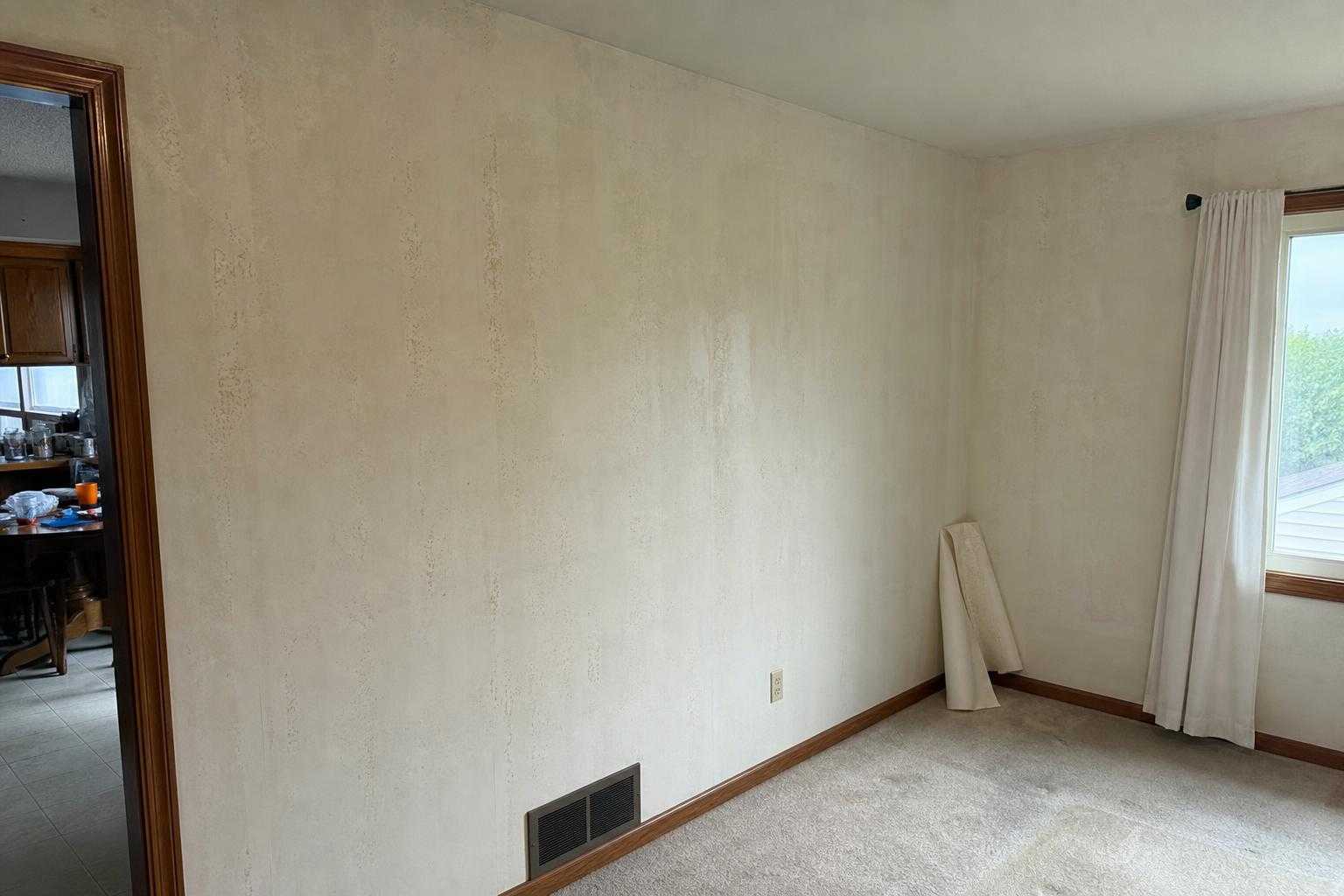
This page covers what wallpaper removal costs in Hastings, what the work includes, and what to expect when I show up to do the job.
I’m Nick, owner of Bedrock Home and Property. On this page I break down how I price wallpaper removal, what goes into the process from scoring and stripping to wall prep, and what a typical visit looks like so you know what you’re getting before anything starts.
Feel free to read through at your own pace, or reach out directly through my contact page if you’d rather just ask a question or send a text.
Common Types of Wallpaper Removal Jobs
Wallpaper removal is not a one-size-fits-all job because the difficulty depends heavily on factors like how many layers are present, what adhesive was used, and whether the drywall underneath was properly primed when the paper was originally hung. Every home I work in around Hastings presents a different set of challenges.
The Most Common Variations
- Single-layer vinyl wallpaper removal. This is the most straightforward type I encounter, where one layer of modern vinyl paper was applied over primed drywall and peels away with minimal wall damage.
- Multi-layer wallpaper removal. Some homes have two or three generations of wallpaper stacked on top of each other, which requires careful scoring and soaking to avoid tearing the drywall underneath.
- Wallpaper over unprimed drywall. When paper was hung directly on bare drywall without a primer coat, removing it risks pulling the drywall facing off, so I work slowly and use specialized solutions.
- Wallpaper over plaster walls. Older Hastings homes often have plaster walls, which are more forgiving during removal but still require careful water management to prevent damage.
- Bathroom wallpaper removal. High humidity causes adhesive to bond differently, and the moisture already present in the walls requires extra care to prevent mold before new finishes go up.
What Homeowners in Hastings Actually Pay for Wallpaper Removal
Most wallpaper removal jobs start around $300 for a single room with cooperative paper and walls that are in decent shape. Once you add more rooms, multiple layers, or older plaster walls into the mix, the total typically lands somewhere between $300 and $1800. Where your project falls in that range depends a lot on what I find once the work gets started.
What the Job Usually Runs
- A single room with one layer of wallpaper. This is the most straightforward version of the job. The paper comes off cleanly, the walls get prepped, and you’re ready to paint. Jobs like this usually come in right around $300 to $500.
- When the job includes multiple rooms or difficult paper. Vinyl-coated or older wallpaper that’s been on the wall for decades takes significantly more time and effort to strip without damaging the drywall underneath. These projects generally run $500 to $1000 depending on room count and condition.
- Full multi-room removal with layered or damaged walls. If I’m pulling two or more layers and dealing with wall repairs along the way, the scope expands considerably. This kind of work typically runs $1000 to $1800 by the time everything is stripped and prepped properly.
What Can Push the Cost Up or Down
- Number of wallpaper layers. Each additional layer adds stripping time and increases the risk of wall damage that needs patching before the room is paint-ready.
- Wall surface type. Plaster walls and unprimed drywall both require more careful technique and extra time compared to properly primed modern drywall.
- Wall repairs after removal. Torn drywall face paper or gouged surfaces need to be skim coated and sanded, which adds cost to the overall project.
- Room accessibility. Tall ceilings or tight stairwell walls require extra staging time and slow down the pace of the work.
What Affects the Cost of Wallpaper Removal
Two homes in Hastings can look similar from the street, but once I start assessing the walls, the actual scope of a wallpaper removal job can differ significantly based on what is underneath and how the paper was originally applied.
Factors That Move the Cost
- Number of wallpaper layers. When previous owners papered over existing wallpaper, each layer adds stripping time and increases the chance of wall damage that needs repair before any new finish can go on.
- Wall surface type. Drywall absorbs water during the removal process and tears much more easily than plaster, which means I have to work slower and more carefully to avoid gouging surfaces that would then need patching.
- Wallpaper adhesive type. Older adhesive used in homes built before the 1980s often bonds more aggressively to the wall, requiring chemical stripping solutions and longer soak times that stretch the job out considerably.
- Room accessibility and size. Large rooms, high walls, or tight corners around built-ins and trim all slow down the stripping process and add to the total time I spend on site.
- Wall repair scope after removal. Most walls need some level of skim coating or patching once the paper is gone, and the extent of that damage directly affects how much prep work I need to do before the surface is ready for paint.
What Else Can Show Up on a Wallpaper Removal Quote
The base price for wallpaper removal covers stripping the paper itself, but the final total can shift once I get into the actual walls. Most of these add-ons are situational, so knowing what they are helps you read a quote without any surprises.
Common Add-Ons on a Wallpaper Removal Job
- Multiple wallpaper layers. When I pull back the surface layer and find a second or third layer underneath, that adds stripping time and effort that the base price does not account for.
- Drywall or plaster repair. Wallpaper sometimes pulls facing paper off drywall or reveals cracked plaster, and patching that damage is a separate scope of work I quote once I see it.
- Skim coating the walls. Older adhesive residue or uneven texture left behind often needs a skim coat before paint will look right on the surface.
- Wallpaper glue residue removal. Heavy adhesive buildup requires extra cleaning solution and labor beyond standard stripping.
- Priming after removal. Bare or repaired drywall almost always needs a primer coat before any finish paint is applied, and that step is typically a separate line item.
Repair vs. Replace on Wallpaper Removal
Sometimes a targeted fix is all a wall really needs before it looks great again, and rushing straight to full removal is not always the smartest move. That said, there are real situations where removing everything and starting fresh saves you money and headaches down the road.
When Repair Makes Sense
- Small section is peeling at a seam. If only a few feet of wallpaper has lifted along an edge, re-adhering that section and touching up the finish is far more practical than stripping the entire room.
- Single wall has minor bubbling. When bubbles are isolated to one accent wall and the paper elsewhere is bonded firmly, injecting adhesive and smoothing it flat is a quick, affordable fix.
- Wallpaper borders need removal only. Stripping a decorative border while leaving intact field wallpaper beneath saves significant time and keeps costs low.
- Underlying drywall is in solid condition. When I score and test a corner and the wall surface beneath is smooth and undamaged, a careful partial removal makes good sense.
When Replacement Makes More Sense
- Multiple layers have been wallpapered over. Removing layer after layer gets expensive fast, and full removal becomes the cleaner long-term solution.
- Moisture has damaged the wall surface beneath. When the drywall paper is compromised under the wallpaper, patching alone will not hold and full removal plus repair is necessary.
- Repair costs approach half of full removal. If spot repairs are adding up close to 50 percent of a complete job, full removal almost always makes better financial sense.
- Wallpaper covers the entire home. When every room is dated and peeling, tackling it all at once is more efficient and cost-effective than repeated small repair visits.
What Is Not Included in a Standard Wallpaper Removal Job
Knowing exactly what a standard wallpaper removal visit covers helps you plan your project budget accurately and avoid unexpected costs when the job wraps up.
Outside a Standard Wallpaper Removal Visit
- Drywall repair and skim coating. Removing wallpaper often reveals damaged or uneven drywall underneath, and restoring that surface is a separate wall repair service that requires its own time and materials estimate.
- Priming and painting the walls. Once the walls are stripped and any repairs are done, painting is a follow-on job I quote independently rather than bundle into removal.
- Mold remediation behind the wallpaper. If moisture damage or mold is discovered during removal, that work falls to a licensed remediation contractor and is outside my scope entirely.
- Removal of chair rails or trim attached to wallpaper. Detaching and reinstalling trim pieces is a carpentry task that changes the job scope and needs to be discussed before work begins.
If you are unsure what your specific situation involves, just ask me at the quote stage and I can adjust the scope before any work starts.
What to Look for When Hiring for Wallpaper Removal
Not every contractor approaches wallpaper removal the same way, and the difference shows up clearly once the walls are bare. Before you book anyone, take a close look at what is behind the quote and whether they understand what your specific walls actually need.
Things Worth Checking Up Front
- Ask how they handle wall damage after stripping. Good removal work includes assessing and repairing the drywall or plaster underneath, not just pulling paper off and walking away.
- Confirm they test a small area first. A contractor should check how the wallpaper was hung and whether the drywall beneath is properly primed before committing to a removal method.
- Find out if sizing or wall prep is included. Bare walls often need a skim coat or sizing applied before paint will look right.
- Ask how many layers they are quoting for. Multiple layers of wallpaper significantly change the scope of work and should be reflected in the price upfront.
What I See Doing Wallpaper Removal in Hastings
Hastings has a high concentration of Victorian-era and early 1900s homes where wallpaper was applied directly over plaster, sometimes in three or four layers built up over decades. That changes the job significantly: plaster does not tolerate aggressive soaking the way drywall can, so I work with less water and more patience to avoid saturating the surface beneath. When I do find drywall in these older homes, it was often installed during mid-century updates without sizing or primer, which means the face paper pulls away with the wallpaper and requires skim coating before the wall is paint-ready.
I run into this regularly in the Northside and Southside neighborhoods, where the housing stock is dense with exactly these older finishes. If you are dealing with stubborn layers or uncertain wall conditions, I can assess it honestly before the work starts through my handyman services in Hastings.
Questions I Get All the Time in Hastings
These are the questions I hear most about Wallpaper Removal, so I want to answer them upfront before you decide to book.
Q. How long will it take to remove the wallpaper in my home?
A. It really depends on how many walls are involved, how many layers of wallpaper are present, and how well the original installer prepped the drywall underneath. A single average-sized room can take anywhere from half a day to a full day. Older homes in Hastings sometimes have two or three layers stacked on top of each other, which adds significant time to the project.
Q. What should I do to get the room ready before you arrive?
A. Please clear the furniture away from the walls as much as possible, or at least push it toward the center of the room so I have open access to every wall surface. Take down any artwork, mirrors, outlet covers, and switch plates ahead of time if you can. Having the room as open as possible lets me get started right away without losing time on setup.
Q. What happens if you find damaged drywall or mold once the wallpaper comes off?
A. It does happen, especially in older Hastings homes where moisture got behind the paper over the years. If I uncover something like that mid-job, I stop and walk you through exactly what I found before doing anything further. You always know the full picture before any additional work is agreed to, and there are never any surprise charges added without your approval.
Wallpaper Removal in Hastings: What You Should Know Before Moving Forward
You now have a solid picture of what wallpaper removal actually involves, from loosening old adhesive to preparing the wall surface underneath. The price you pay depends on factors like wall area, how many layers are present, and the condition of the drywall or plaster beneath. Jobs in Hastings typically range from $300 to $1,800. When I come out, I handle the work myself from start to finish.
Ready to Get Started?
If you have a room in Hastings or the south metro that needs wallpaper stripped and the walls prepped, feel free to reach out or send a text and I can go over the details with you.
More on this topic: Wallpaper Removal service details, Walls & Finishes services, or visit Bedrock Home and Property.