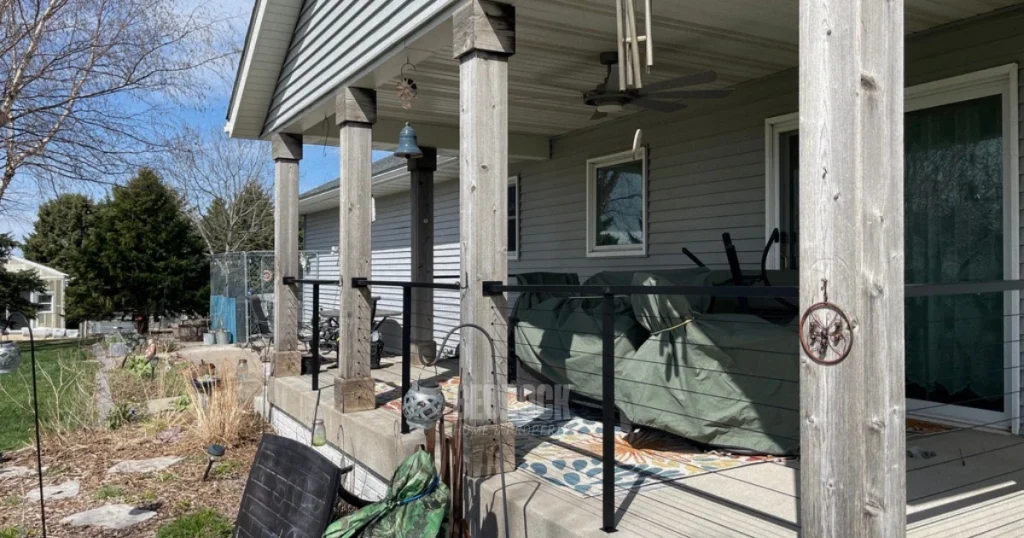
Professional porch and deck railing replacement and repair for safety and curb appeal.
How I Can Help
Here's a look at what porch and deck railing replacement can include. Post condition and attachment method shape the scope:
Tasks Not Typically Included
Railing replacement scope depends on post condition, what the existing structure is attached to, and whether the decking or porch surface needs attention. This covers what's typically outside scope, but reach out before booking if you want to confirm your porch setup.
Structural deck framing repair or ledger board replacement
Licensed electrical work for railing lighting or post cap fixtures (requires licensed electrician)
Full deck replacement or new deck construction
Concrete footing work for new posts beyond standard post base hardware
Always Part of the Job
These four standards come with every job, no matter the size or scope.
How It Works
Four simple steps to complete your porch railing replacement service.
Why Replace Porch Railings with Bedrock
Owner Operated Service
You work directly with me from first message to final walkthrough.
Direct One-on-One Support
No handoffs or middlemen. I keep communication clear and personal.
Transparent Solo Pricing
I give upfront pricing before work starts, with no surprise add-ons.
Personally Guaranteed Work
I personally stand behind every job and make it right if needed.
Porch Railing Questions
Common questions about porch and deck railing replacement.
How much does railing replacement cost?
Railing replacement prices best after a look. Linear footage, material, and post condition all drive the number, and code requires 36 inches on most decks. I do a $95 on-site assessment with a written quote, and the $95 comes off the job when you book. For a ballpark first, the calculator range is free and instant.
Can you match my existing railing?
Yes, I match existing style and material where possible, or help you choose updated options including Trex Signature aluminum balusters, TimberTech composite railing, or powder-coated aluminum systems.
What's code height for railings?
Minnesota building code requires guardrails on any walking surface more than 30 inches above grade. Minimum rail height is 36 inches for most decks and 42 inches for surfaces 6 feet or more above grade. Baluster spacing cannot exceed 4 inches.
How long does replacement take?
Most railing replacement projects take half to a full day depending on linear footage. Projects requiring new post installation with concrete setting may span two visits.
Can you just replace the posts?
Yes, I can replace individual rotted or damaged posts while retaining the existing top and bottom rail assembly if it is structurally sound and cosmetically acceptable.
Where I typically work
Proudly serving Dakota County homeowners and the surrounding communities.
Restore Your Porch Railing
Price your project (or list) in a few minutes
No email required to get the results.
Price My Job