
How I Can Help
Here's what exterior sealing can include. Home age, siding type, and target areas affect the specifics, but this covers the range:
Caulk around all exterior windows and doors
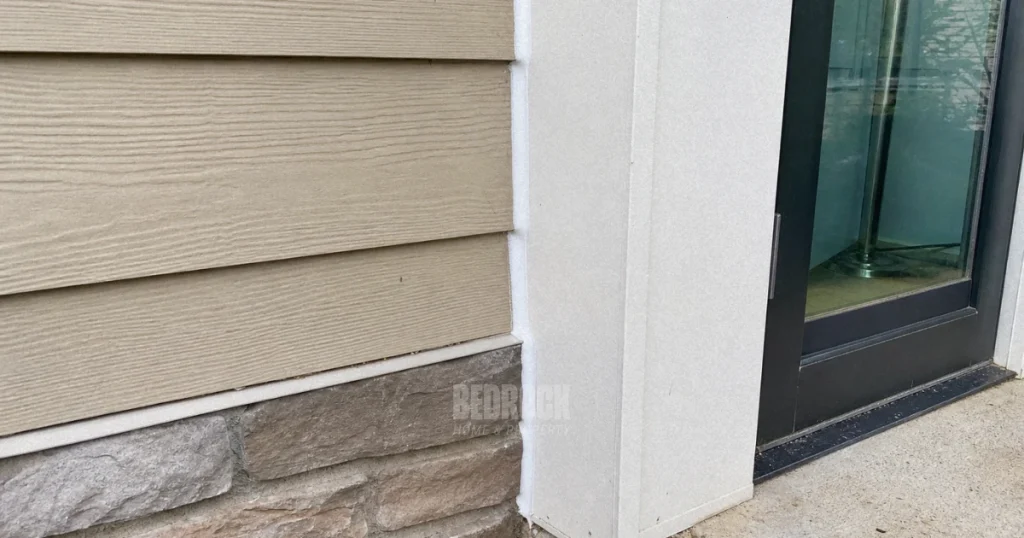
Seal gaps at siding-to-trim transitions
Caulk around exterior penetrations including pipes vents and fixtures
Seal foundation sill plate gaps
Caulk corner boards and trim joints
Remove and replace failed or cracked caulk
Apply backer rod in wide gaps
Seal gaps around exterior fixtures and outlet covers
Address air infiltration at rim joists
Apply sealant around chimney base and flashing transitions
Tasks Not Typically Included
Exterior sealing is focused on accessible surfaces and penetrations. Here's what's typically outside scope.
Roof-level flashing repair or replacement
Below-grade waterproofing or foundation crack injection
Interior spray foam insulation
Masonry tuckpointing or mortar repair
Sealing of damaged or deteriorated surfaces that require repair first
Included With Every Job
These four standards come with every job, no matter the size or scope.
Neat work area
Plantings and surfaces below work areas stay protected throughout.
Full cleanup
All removed caulk strips, backer rod scraps, and packaging are cleared before I leave.
Professional appearance
I arrive prepared with the right products for your siding and substrate and work cleanly around your windows and trim.
Job walkthrough
We walk the full area worked before I leave so you can see every joint sealed and confirm nothing was missed.
How It Works
Four simple steps to get your home sealed against moisture and drafts.
Exterior Sealing FAQs
Here are answers to common questions about exterior caulking and sealing services.
How much does exterior sealing cost?
Exterior sealing starts at $250 for a focused area like windows and doors on one side of the home. A full-perimeter caulk job covering all windows, doors, trim transitions, and penetrations on a typical single-family home typically runs $450–750 depending on home size, siding type, and condition of the existing caulk. Free estimates provided.
When is the best time of year to have exterior caulking done?
Late summer through early fall is the ideal window — temperatures are stable, surfaces are dry, and the work is done before freeze-thaw cycles begin. That said, any time the temperature is above 40°F and surfaces are dry, exterior caulk can be applied effectively.
How often does exterior caulking need to be replaced?
Most exterior caulk has a serviceable life of 5–10 years depending on sun exposure, temperature cycling, and how well it was applied originally. South and west exposures tend to fail faster. I can assess condition during a walkthrough and prioritize what needs attention now versus what can wait.
What type of caulk do you use on exterior applications?
I use paintable elastomeric and polyurethane-based caulks rated for exterior use, selected by substrate — different products work better on wood, masonry, vinyl, and metal transitions. On painted surfaces I use a caulk that can be painted over after cure.
Can you tell which areas need sealing during an assessment?
Yes. During an assessment I walk the full perimeter and flag failed joints, shrinkage cracks, open gaps, and areas where the caulk has pulled away from the surface. I give you a written summary of what I find so you can prioritize based on urgency and budget.
Where I typically work
Proudly serving Dakota County homeowners and the surrounding communities.
Seal Your Home Before Winter
GET ESTIMATE
Don't let another season of cold air and moisture get through your exterior envelope. Complete the form below to schedule exterior sealing and get a free estimate.
Request Service